
Blog

- By Admin
- Dec 12, 2025
How do you choose the best 3D printing method for your mechanical design?
Choosing the best 3D printing method for your mechanical design involves considering several factors to match the specific requirements of your project. Here are some steps to help you make an informed decision:
1. Identify Design Requirements:
Clearly define the functional and performance requirements of your mechanical design. Consider different factors the part will encounter, such as:
- Load-bearing capabilities
- Material properties
- Dimensional Accuracy
- Surface Finish
- Environmental Conditions
2. Material Compatibility:
Different 3D printing methods support various materials. Ensure that the method you choose is compatible with the materials that meet your design requirements. For example,
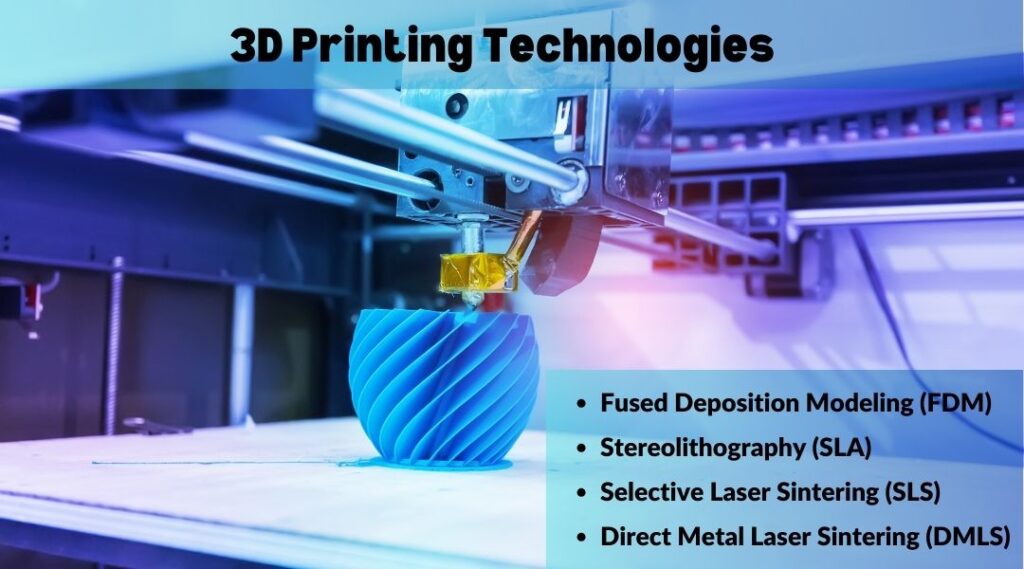
- Fused Deposition Modeling (FDM) works well with thermoplastics
- Selective Laser Sintering (SLS) supports plastics like Nylon
- Resin-based materials (for SLA/DLP printing)
- Metal alloys (e.g., stainless steel, aluminum, titanium for DMLS Printing)
3. Evaluate 3D Printing Technologies:
Different 3D printing technologies offer various advantages and disadvantages. Some common methods for mechanical parts include:
- Fused Deposition Modeling (FDM): Suitable for rapid prototyping and functional parts. Limited resolution but cost-effective.
- Stereolithography (SLA) and Digital Light Processing (DLP): Ideal for high-detail and precision parts. Uses liquid resin cured by UV light.
- Selective Laser Sintering (SLS): Suitable for producing functional prototypes and end-use parts with a wide range of materials, including some metals.
- Powder Bed Fusion (PBF): Includes technologies like Direct Metal Laser Sintering (DMLS) for metal parts and Selective Laser Melting (SLM).
- Binder Jetting: Used for sand casting molds and metal parts. Offers good material variety.
4. Print Size:
Consider the size of your design. Some 3D printers have limitations on build volume, so ensure your design can fit within the printer’s capabilities.
5. Surface Finish:
If a smooth surface finish is critical for your application, methods like SLA or MultiJet Printing (MJP) can provide high-quality surface finishes compared to FDM, which may exhibit visible layer lines.
6. Mechanical Properties:
Assess the mechanical properties of the chosen 3D printing method’s materials. Different methods may have varying strengths, stiffness, and other mechanical characteristics. Make sure they align with your design’s requirements.
7. Tolerance and Accuracy:
Consider the level of tolerance and dimensional accuracy needed for your mechanical design. Some methods can achieve higher precision and accuracy than others.
8. Production Volume:
Determine the volume of parts you need to produce. For low-volume production, 3D printing may be more cost-effective than traditional manufacturing methods.
9. Cost Analysis:
Conduct a cost analysis that takes into account the initial setup cost, material costs, and post-processing requirements. Consider the overall project budget and cost-effectiveness of each method.
10. Time Constraints:
Evaluate the lead time for each 3D printing method. Some methods may offer faster production times than others.
11. Experience and Expertise:
Consider your team’s familiarity and expertise with specific 3D printing methods. If you have experience with a particular method, it may be advantageous to stick with it for your project.
12. Consult with Experts:
If you’re unsure about which 3D printing method to choose, seek advice from experienced professionals or consult with 3D printing service providers who can recommend the best approach based on your project’s specific requirements.
13. Iterate and Test:
If possible, create prototypes or test parts using different 3D printing methods to evaluate their performance against your design requirements. This can help you make an informed decision.
Remember that the “best” 3D printing method may vary from project to project, so it’s essential to carefully assess your unique needs and constraints before making a choice.
By carefully considering these factors and weighing the pros and cons of each 3D printing method, you can select the one that best aligns with your mechanical design requirements, budget, and project goals. It’s essential to keep in mind that no single 3D printing method is perfect for every application, and the best choice will depend on the unique characteristics of your design project.




Leave a Reply