
Blog

- By Admin
- Sep 18, 2026
3D Printing for Drones in India: Strengthening the UAV and Counter-Drone Supply Chain
How additive manufacturing helps India build, modify and replace drones and counter-drone systems faster than the threat changes.
Key takeaways
- Additive manufacturing (AM) removes the tooling step that slows down drone and counter-drone hardware production.
- It reduces part weight and part count, which directly improves flight time, payload and range.
- For India, AM also reduces dependence on imported components by enabling distributed, on-demand production.
- Defence-grade use requires the same discipline as any aerospace part: qualified processes, certified partners and full documentation.
Why UAVs and counter-drone systems need a different kind of manufacturing
Unmanned aerial vehicles (UAVs) have moved from niche use to front-line relevance. From the battlefields of Eastern Europe to India’s own western border, small, low-cost drones are now doing work that once required expensive fighter aircraft and trained pilots — surveillance, targeting, payload delivery, and in the case of loitering munitions, strikes.
Every drone capable of attack has to be stopped by something. That’s the role of Counter-UAS (C-UAS): the radars, sensors, jammers and interceptors that detect and neutralise hostile drones. The India-Pakistan hostilities of May 2025 (Operation Sindoor) demonstrated this at scale — large numbers of drones were used on both sides, and a layered counter-drone shield proved essential rather than optional.
This raises a direct question for Indian manufacturers: can drones and counter-drone systems be built, modified and replaced faster than the threat changes? Additive manufacturing is one of the strongest tools available to answer yes.
What additive manufacturing actually does
Conventional manufacturing starts with a block of metal and removes material, or requires a mould or die to be built before the first part exists. Both routes need tooling, time and material that ends up as waste.
Additive manufacturing builds a part directly from a digital file, layer by layer, with no tooling required:
- L-PBF (Laser Powder Bed Fusion): a laser melts fine metal powder to build metal parts.
- SLS (Selective Laser Sintering): a laser fuses nylon powder to build strong polymer parts.
Because there’s no mould or die, a design change doesn’t require new tooling — it requires printing the updated file.
Why 3D printing and UAVs are a natural fit
In a drone, every gram affects flight time, payload and range. AM delivers measurable benefits here:
- Lightweighting: Topology optimisation removes material from anywhere it isn’t carrying load; internal lattice structures keep parts stiff while reducing weight.
- Part consolidation: Assemblies that once needed a dozen or more machined pieces, fasteners and joints can often be printed as a single part — fewer joints, less weight, fewer failure points.
- Faster design iteration: A design change can move from file update to flight-test part in days, since there’s no tooling lead time.
- Material fit for the application: Titanium (Ti6Al4V) and aluminium (AlSi10Mg) for structural brackets and mounts; nickel superalloys like Inconel for hot engine parts; PA12 and PA11 nylons for airframes, ducts and housings.
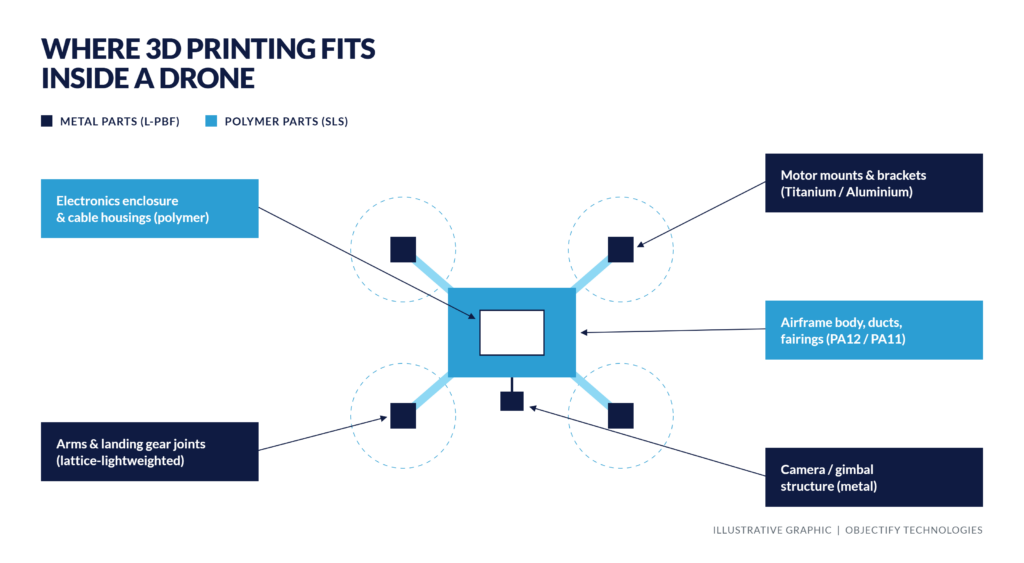
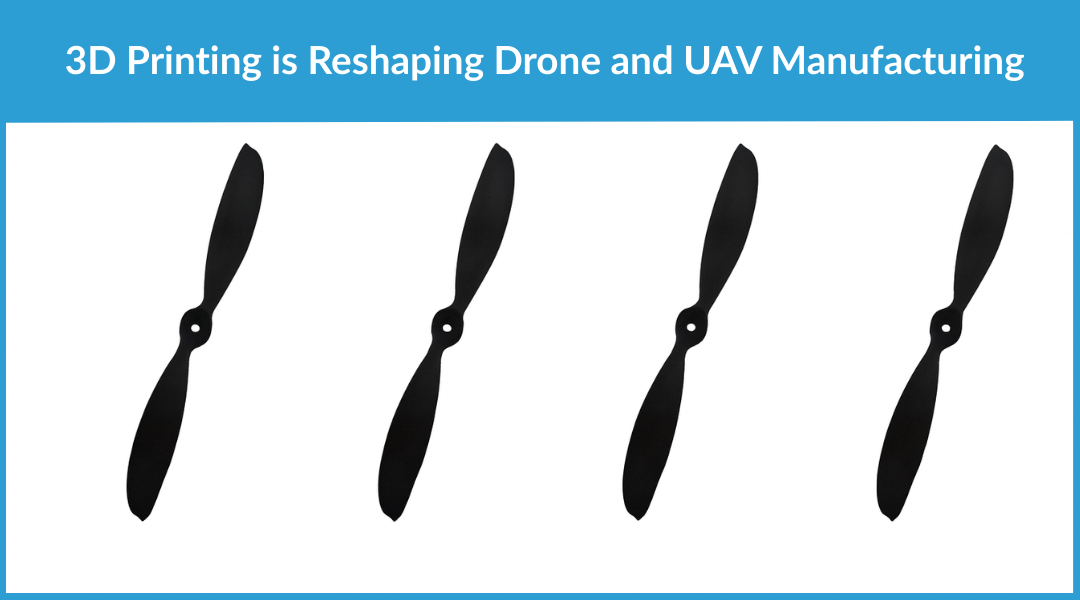
[Figure 1] Typical drone components that can be made in metal and polymer 3D printing.
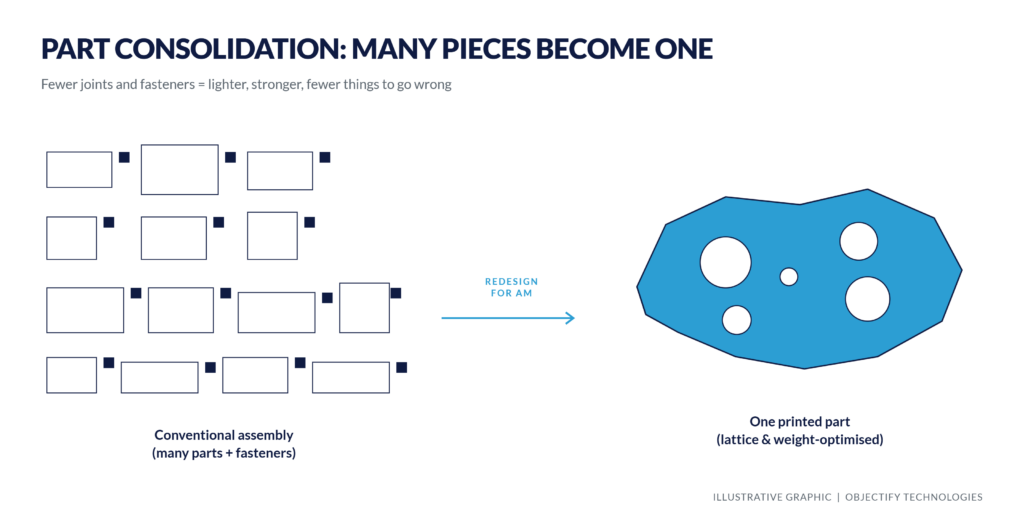
[Figure 2] Part consolidation — a multi-part assembly redesigned into a single printed part.
For larger platforms — loitering munitions, small jet-powered drones — AM goes further. Combustors, fuel nozzles and heat exchangers with internal cooling channels, difficult or impossible to machine conventionally, can be printed as single components. Cooling plates for high-power electronics are another area where printing does what conventional methods can’t.
The tooling problem
The single biggest reason AM suits drone production is that it removes the tooling stage entirely. Conventional production requires a die, mould or fixture before the first part exists — a process that can take weeks or months, and has to be redone if the design changes.
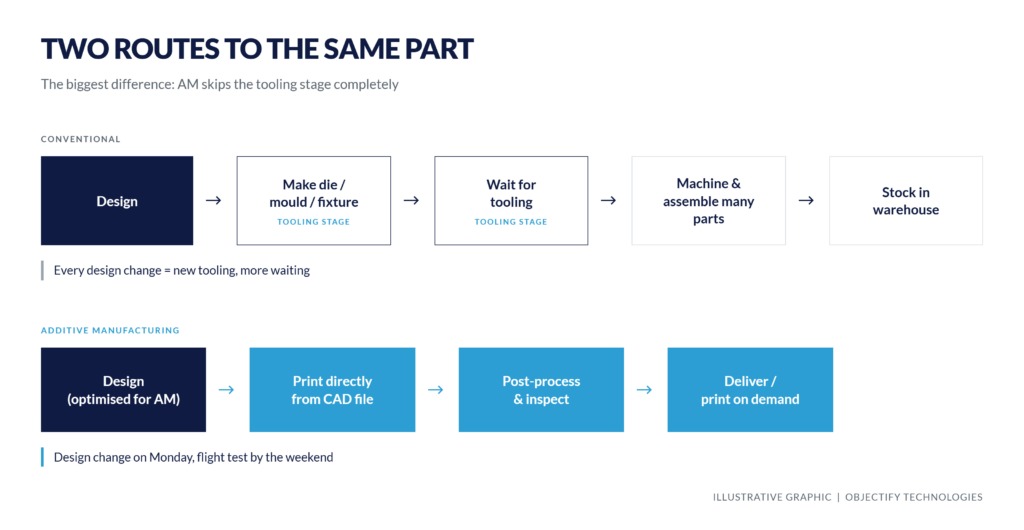
[Figure 3] Conventional vs. additive manufacturing route — AM goes directly from design to part.
In a domain where tactics and threats change every few months, this isn’t a convenience — it’s an operational requirement.
Where 3D printing helps counter-drone (C-UAS) systems
A counter-drone system works in four stages: detect, track, identify, and neutralise (by jamming, spoofing or physical interception). Each stage has hardware that benefits from printing.
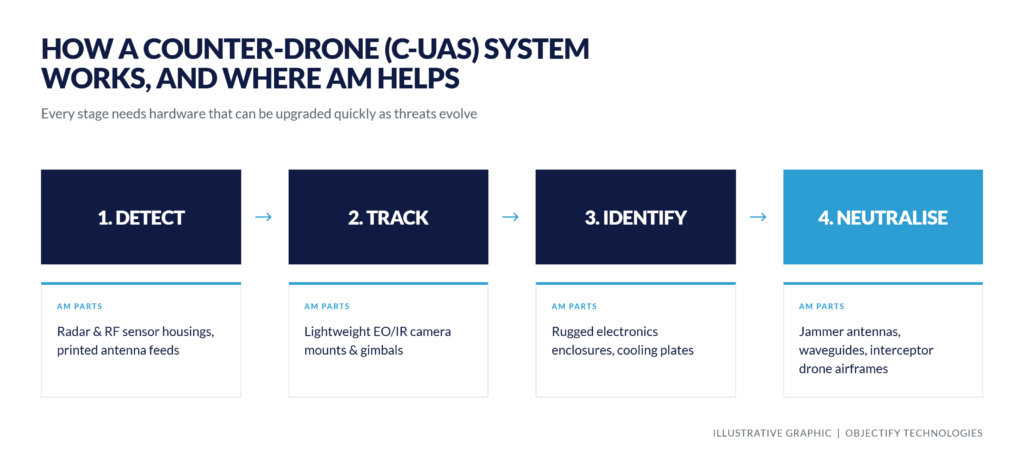
[Figure 4] The four stages of a counter-drone system, and where 3D printing contributes.
- RF components: Waveguides and antenna feeds can be printed with complex internal geometries and mounting features as a single piece.
- Enclosures: Rugged housings can be customised for a vehicle mount, man-portable kit or fixed post without separate tooling for each configuration.
- Interceptor drones: A fast-growing, cost-effective response to low-cost attack drones, interceptor platforms gain the same lightweighting and speed-of-iteration advantages described above.
- As threats evolve, counter-drone hardware needs to evolve with them. AM shortens that cycle from years to weeks.
Strengthening India’s drone supply chain
A system is only as reliable as the supply chain behind it. Dependence on a single foreign supplier for a critical part creates risk exactly when the part is needed most — a pattern seen repeatedly through pandemic-era disruptions, sanctions and export controls. The global drone industry today depends on a small number of countries for motors, structures and electronic sub-parts; for India, that concentration is a strategic risk.
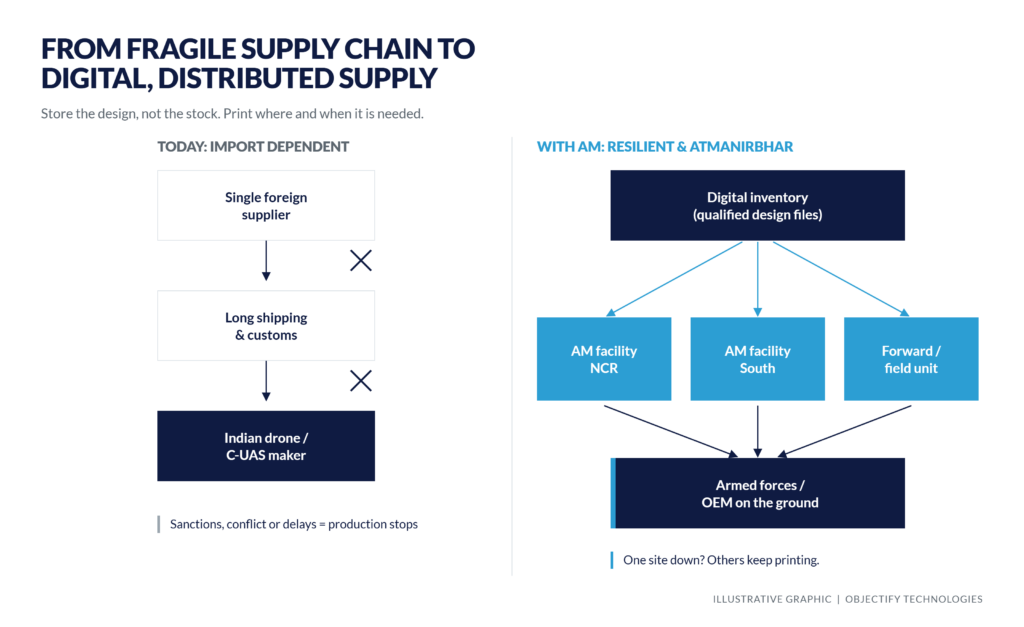
[Figure 5] From an import-dependent supply chain to a digital, distributed and self-reliant one.
Additive manufacturing addresses this in three ways:
- No tooling dependency: Once a design and process are qualified, the part can be produced in India, on demand.
- Digital inventory: Design files replace large volumes of physical spares — parts are printed when needed instead of stocked in advance.
- Distributed production: Manufacturing can be spread across multiple qualified facilities, so disruption at one site doesn’t halt production.
This combination — surge capacity plus resilience — is central to building self-reliant defence manufacturing in India.
What Indian drone and defence companies should do now
- Design for AM from the start. The largest gains come from parts designed for printing, not machining drawings adapted after the fact.
- Treat qualification as non-negotiable. Defence and aerospace customers require repeatable, traceable, documented processes. Working with AS9100-certified partners and engaging early with bodies like CEMILAC and DGAQA reduces delays later.
- Invest in the materials base. Indigenous metal powders and a national database of qualified material properties support genuine self-reliance.
- Build AM skills. Training in design for additive manufacturing, process engineering and post-processing pays off over the long term.
- Plan for export. Allied nations are looking for reliable, cost-competitive UAV and C-UAS hardware. Certified Indian AM capability can serve export markets, not only domestic programmes.
AM isn’t a universal replacement for conventional manufacturing — printed parts still require post-processing, inspection and certification, and high-volume simple parts may remain cheaper to machine. It works best applied where it clearly wins: complex, lightweight, fast-changing, supply-critical parts.
Where Objectify stands
We’re an AS9100 Rev D and ISO 9001:2015 certified additive manufacturing service bureau in Greater Noida — running EOS M290 and M400-4 laser powder bed fusion systems and EOS P396 and P110 SLS platforms in-house.
We work with India’s leading aerospace, defence, space and UAV organisations, supporting programmes from design-for-AM and prototyping through to qualified series production.
About the author
Ankit Sahu is Co-founder & Director of Objectify Technologies, an AS9100 and ISO 9001-certified additive manufacturing service bureau based in Greater Noida. He co-founded the company in 2013 and has worked with automotive, aerospace, defence and space organisations on additive manufacturing adoption.
Frequently asked questions
Can 3D printed parts be used in defence-grade drones and UAVs?
Yes, when produced through a qualified process on certified equipment. Metal parts use materials like titanium and aluminium alloys, and polymer parts use aerospace-grade nylons such as PA12 — following the same documentation and traceability requirements as conventionally manufactured aerospace parts.
What certifications does 3D printing need for aerospace and defence use in India?
AS9100 is the baseline certification most defence and aerospace customers require from a manufacturing partner. Depending on the programme, engagement with CEMILAC and DGAQA is also required for airworthiness and quality certification.
Which materials are used to 3D print drone and counter-drone components?
Titanium (Ti6Al4V) and aluminium (AlSi10Mg) for structural brackets and mounts, nickel superalloys like Inconel for hot engine parts, and nylons like PA12 and PA11 for airframes, ducts and enclosures.
Is 3D printing cost-effective for producing drones at scale?
It depends on the part. AM is strongest for complex, lightweight, fast-changing or low-to-medium-volume parts, where it eliminates tooling cost and lead time. For high volumes of simple, unchanging parts, conventional manufacturing can still be cheaper.
How does 3D printing support India’s self-reliance goals in defence?
By removing dependence on tooling and imported spares, AM allows qualified parts to be produced on demand, domestically, across multiple facilities — reducing exposure to import restrictions and single-supplier risk.
If you’re working on a UAV, loitering munition or counter-drone programme and want to explore how additive manufacturing can reduce weight, shorten development time and de-risk your supply chain, talk to our team here.



Leave a Reply