
Blog

- By Admin
- Dec 12, 2025
3D Printing Launch Vehicles: How Additive Manufacturing is Revolutionizing Space Exploration
3D Printing Launch Vehicles: How Additive Manufacturing is Revolutionizing Space Exploration
3D printing is taking the world by storm, causing a complete upheaval of architecture and design processes and concepts as we know it. Virtually every single industry has been impacted by this innovative technology. 3D printing has contributed to major advances in humankind already, such as 3D printed foods and cells and tissues. As 3D printing continues to forever change the way things are done here on Earth, what does this tech hold for space exploration?
One of the most crucial and most challenging aspects of space exploration is merely the launch. Creating launch vehicles that can produce the 3.5 million kilograms of thrust required to reach escape velocity and successfully exit the earth’s gravitational pull is no easy feat. These launch vehicles take years to design and manufacture, and they require perhaps millions of parts to build. With this comes exorbitant costs. In fact, “modern” launch vehicles cost billions per launch. NASA’s Artemis mission is anticipated to cost $4.1 billion per launch.
Traditional techniques for building these launch vehicles also yield a heavier overall payload. A heavy payload launch vehicle will require more resources, and this often necessitates a longer build time and even higher costs.
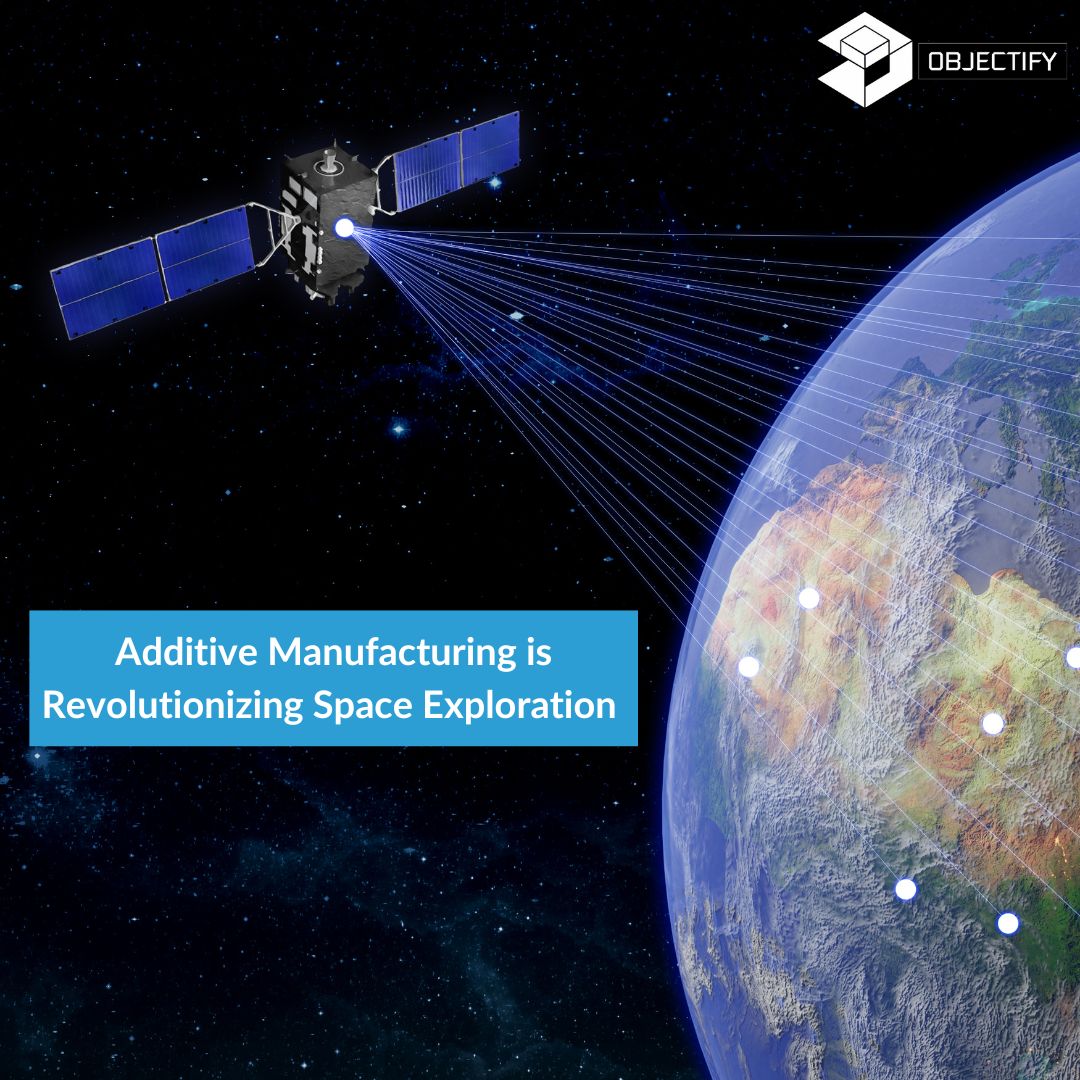
The manufacturing and building process for launch vehicles can be drastically shaved down with the use of additive manufacturing. Additive manufacturing, the industrial term for 3D printing, has massive potential to advance space exploration beginning with launch.
As you might imagine, additive manufacturing in building space launch vehicles serves a major purpose: to reduce the time required for the design and manufacturing cycle. 3D printing technology requires machines and technology as opposed to workers, and due to the consistency and quality of additive manufacturing, the final result is likely to be a far more superior outcome as opposed to traditional space launch vehicles.
3D printing can sculpt launch vehicle designs with fluid lines that require fewer components. This is a major jump in space vehicle fabrication, which has traditionally required countless small and large pieces. With 3D printing, the concern for lost, missing, or out of stock items is eliminated because any necessary parts can be fabricated on-site. Plus, with fewer parts and outsourcing needed, the cost of building a launch vehicle is drastically reduced.
Perhaps one of the most unique aspects of 3D printing space launch vehicles is in the actual architecture. Additive manufacturing methods can employ completely unique and complex geometry into lightweight structures, thus making them ultra-strong. Lightweight but durable launch vehicle designs are highly crucial for blasting into space because they reduce the cost per kilogram launched without sacrificing quality. Payloads and passengers can be kept safe, but the overall cost of the project can be reduced simply by implementing 3D printing.
Space exploration is poised to grow at a rapid pace, and the use of 3D printing in the creation of launch vehicles will only perpetuate a faster advancement by way of more efficient and effective processes.
The 3D printer market in India stands at USD 92.34 million with rapid growth anticipated. This number is expected to climb 20.33% by 2028, which offers a strong indication that this market will only continue to impact manufacturing and design in this world, as well as in space.







Leave a Reply