

Selective Laser Sintering
High-Performance Nylon, No Supports Needed — Industrial SLS for Complex, Tough Parts
3D Print Quote

Selective Laser Sintering
From Prototype to Production Powerhouse — Industrial-Grade SLS for Lasting Results
3D Print Quote
Selective Laser Sintering
From Prototype to Production Powerhouse — Industrial-Grade SLS for Lasting Results
3D Print Quote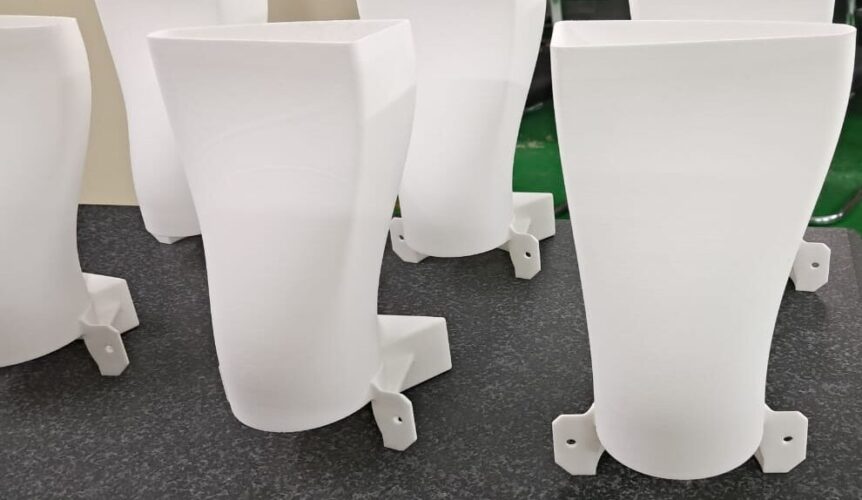
Selective Laser Sintering(SLS)
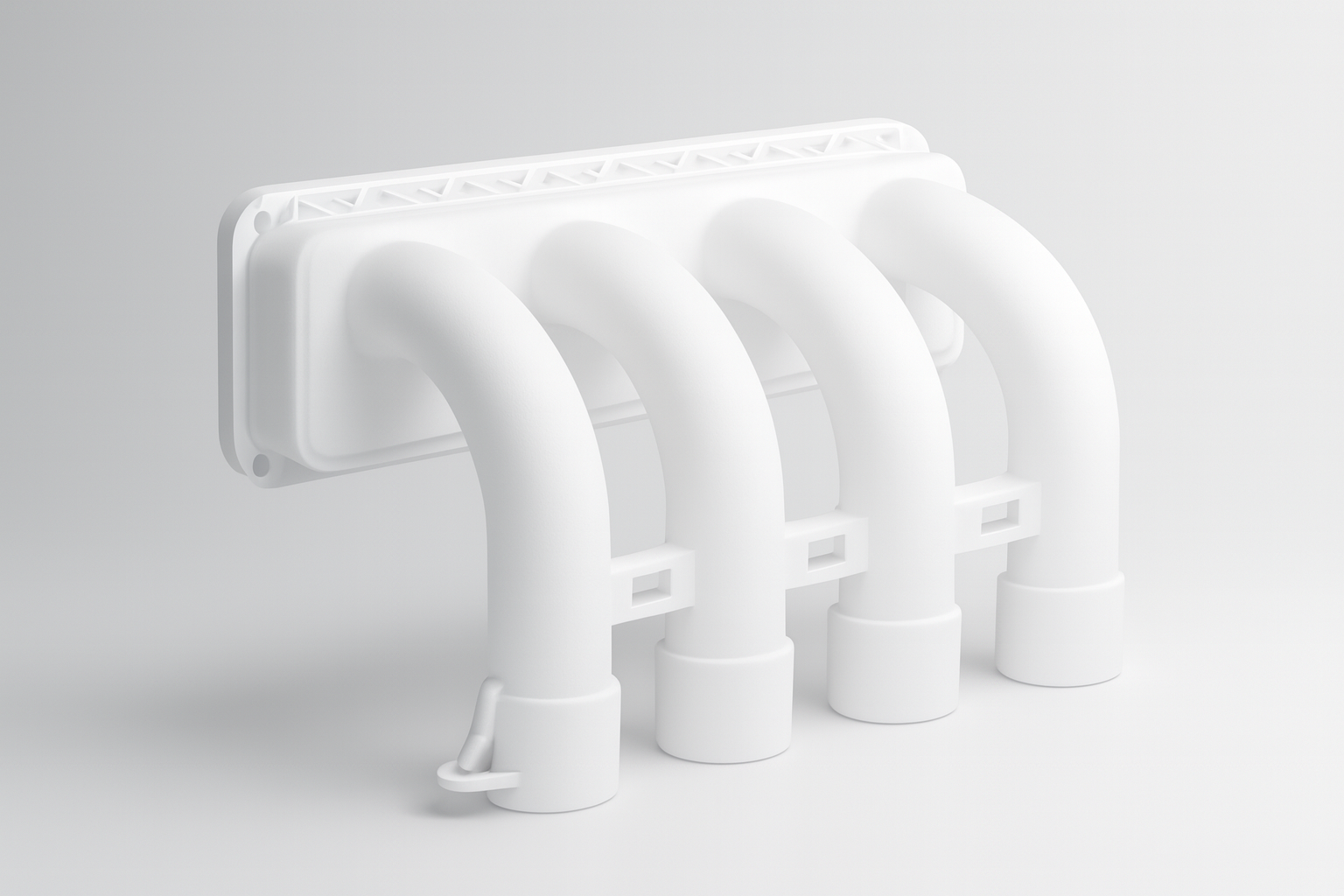
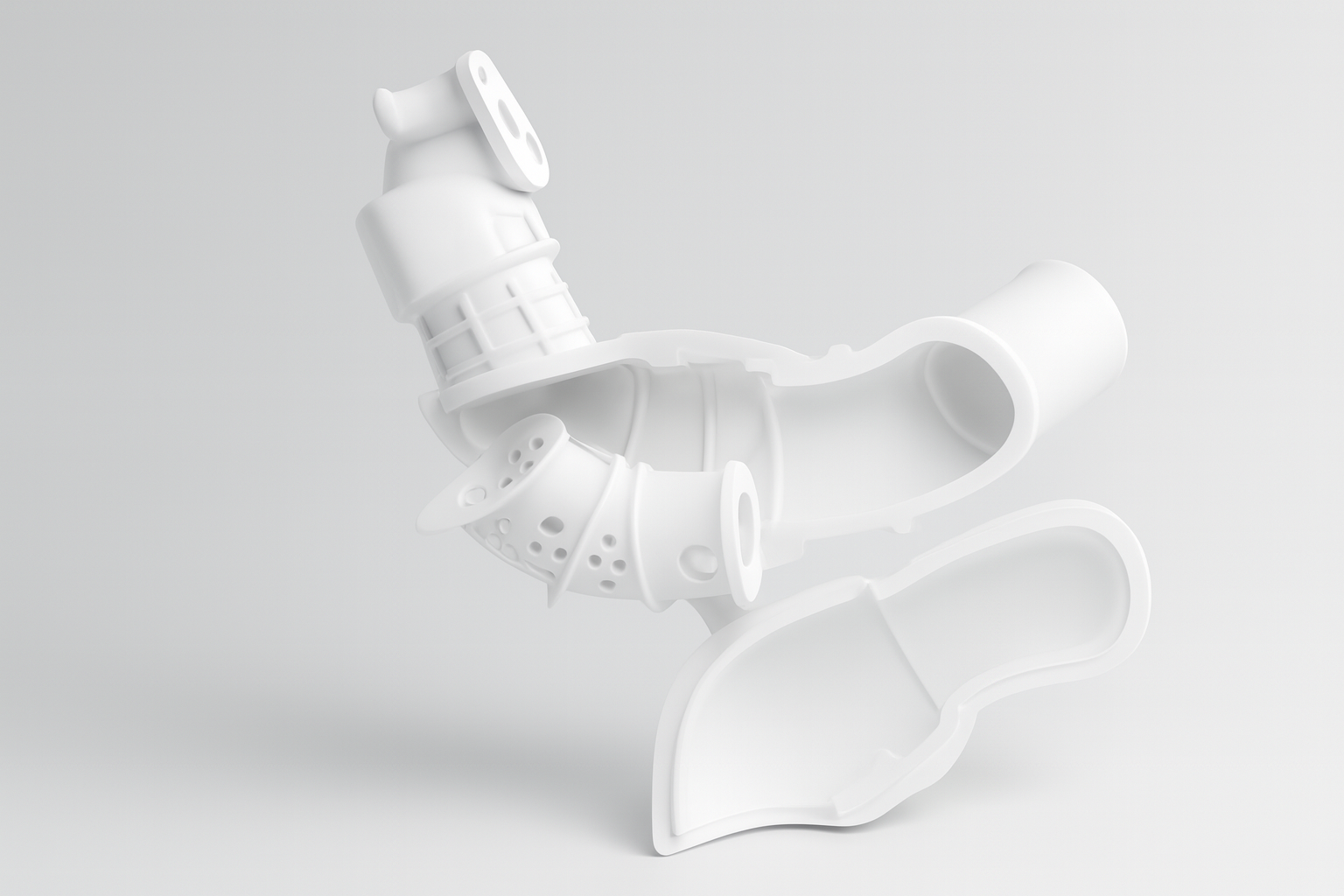
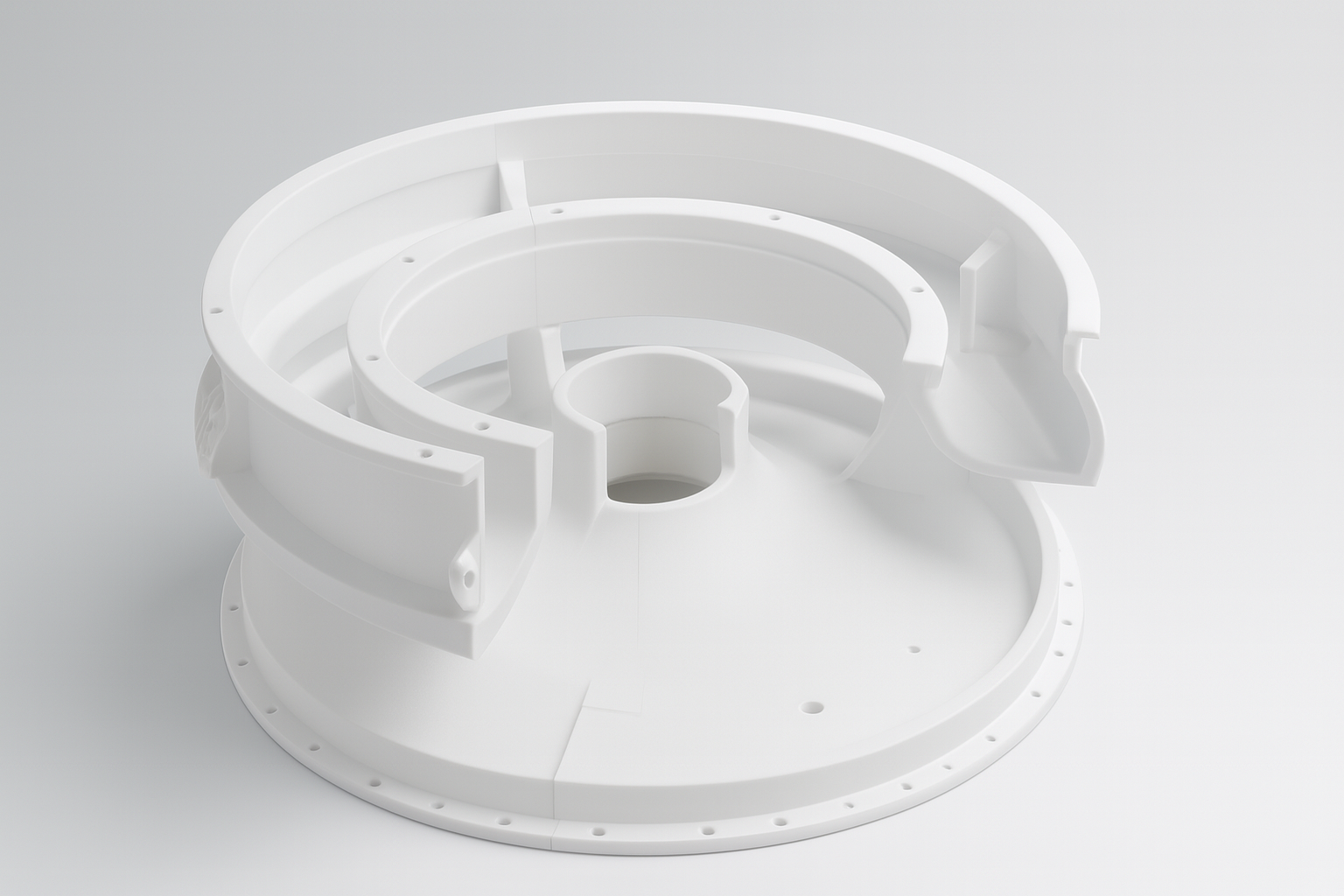
Selective Laser Sintering (SLS) 3D Printing is an additive manufacturing technology that uses a powerful laser to sinter polymer or metal powders layer by layer to build a solid part by scanning the cross-section of a 3D digital design. We manufacture high-quality 3D parts by using some of the top-of-the-line rated printers in the industry such as EOS P 396 and EOS P 110. Build Volume of P 396 – 340 x 340 x 600 mm, while that of the EOS P 110 is 200 × 250 × 330 mm, respectively.
What makes SLS an excellent choice for producing production parts?
SLS is an additive manufacturing technology that uses powdered Nylon 11 and Nylon 12 materials Parts produced are light-weight, highly durable, High throughput and both heat and chemical resistant, making SLS an excellent choice for producing production parts without the expense of tooling.
What are the characteristics of SLS 3D printing?
| Characteristic | Details |
| Materials | Thermoplastics (usually nylon-based, e.g., PA12, PA11 |
| Dimensional accuracy | ± 0.3% (with a lower limit of ± 0.3 mm) |
| Typical build size | 340 × 340 × 600 mm |
| Common layer thickness | 100–120 µm |
| Support | Not required (unsintered powder acts as support) |
Applications
- Functional prototypes
- Low-volume end-use parts
- Complex geometries (e.g., lattice structures, internal channels)
- Jigs, fixtures, and tooling
- Medical models and orthopedic guides
Size
- Small to large parts: From a few cm³ up to 330 × 330 × 600 mm
- Ideal for batch production of multiple parts in one build
Material Properties
| Property | Typical Values |
| Tensile Strength | 40–50 MPa (PA12) |
| Elongation at Break | 10–20% |
| Heat Deflection | ~180°C (HDT at 0.45 MPa) |
| Density | ~0.9–1.0 g/cm³ |